Cart
0
How To Treat My Acne? 5 Things To Try Now
Acne is one of the most common skin concerns, affecting teenagers and adults alike. Whether you're dealing with occasional breakouts, persistent pimples, blackheads, or painful cystic acne, finding the right treatment can feel overwhelming.
The good news is that effective acne management doesn't always require complicated routines. By making a few targeted changes to your skincare habits, you can help reduce breakouts and improve your skin's overall health.
At Halalzen, we're passionate about helping you achieve clearer, healthier-looking skin. Here are five proven strategies you can start using today to help treat acne.
Understanding What Causes Acne
Before treating acne, it's important to understand what triggers it.
Acne can develop when:
-
Excess oil (sebum) clogs pores
-
Dead skin cells accumulate
-
Bacteria grow inside blocked pores
-
Hormonal fluctuations increase oil production
-
Stress affects skin balance
-
Certain skincare products irritate the skin
Because acne can have multiple causes, a consistent skincare routine is essential.
1. Use a Gentle Acne-Friendly Cleanser
Cleansing is the foundation of every acne treatment routine.
A gentle cleanser helps remove:
-
Excess oil
-
Dirt and impurities
-
Makeup residue
-
Environmental pollutants
What to Look For
Choose cleansers containing ingredients such as:
-
Salicylic Acid
-
Niacinamide
-
Zinc
-
Tea Tree Oil
Avoid harsh scrubs and overly drying cleansers, which can irritate the skin and potentially worsen breakouts.
How Often?
Wash your face:
-
Morning
-
Evening
-
After heavy sweating
Over-cleansing can damage your skin barrier, so stick to twice daily whenever possible.
2. Introduce Salicylic Acid
Salicylic Acid is one of the most effective ingredients for acne-prone skin.
Benefits
-
Unclogs pores
-
Reduces blackheads
-
Minimises whiteheads
-
Helps control excess oil
-
Supports smoother skin texture
Salicylic Acid penetrates deep into pores, making it particularly useful for treating congested skin.
Tips for Beginners
Start with:
-
2–3 applications per week
-
Gradually increase frequency if tolerated
Always follow with a moisturiser.
3. Don't Skip Moisturiser
One of the biggest acne myths is that oily skin doesn't need moisturiser.
In reality, dehydrated skin may produce even more oil to compensate.
Benefits of Moisturising
-
Supports the skin barrier
-
Reduces irritation
-
Balances oil production
-
Improves skin comfort
Look for Lightweight Ingredients
Choose non-comedogenic moisturisers containing:
-
Hyaluronic Acid
-
Ceramides
-
Glycerin
-
Squalane
These ingredients provide hydration without clogging pores.
4. Use Niacinamide to Calm Breakouts
Niacinamide has become a favourite ingredient for acne-prone skin.
Why It Works
Niacinamide can help:
-
Regulate oil production
-
Reduce redness
-
Minimise enlarged pores
-
Improve skin texture
-
Strengthen the skin barrier
It pairs well with many acne treatments and is generally suitable for most skin types.
Ideal Concentration
A concentration between 5% and 10% is often effective without causing unnecessary irritation.
5. Wear Sunscreen Every Day
Many acne treatments can increase sensitivity to sunlight.
Without proper sun protection:
-
Dark marks may last longer
-
Pigmentation may worsen
-
Skin irritation may increase
Choose a Non-Comedogenic SPF
Look for:
-
SPF 30 or higher
-
Lightweight formulas
-
Oil-free options
Even during cloudy UK weather, daily SPF remains an important step for healthy skin.
Common Acne Treatment Mistakes
Picking or Squeezing Spots
This can lead to:
-
Scarring
-
Infection
-
Increased inflammation
Using Too Many Products
Introducing multiple active ingredients at once can overwhelm your skin.
Expecting Overnight Results
Acne treatments require consistency.
Most people see improvements after:
-
4–6 weeks
-
Sometimes longer for more severe acne
Skipping Moisturiser
Hydration supports healthy skin and can reduce irritation from active ingredients.
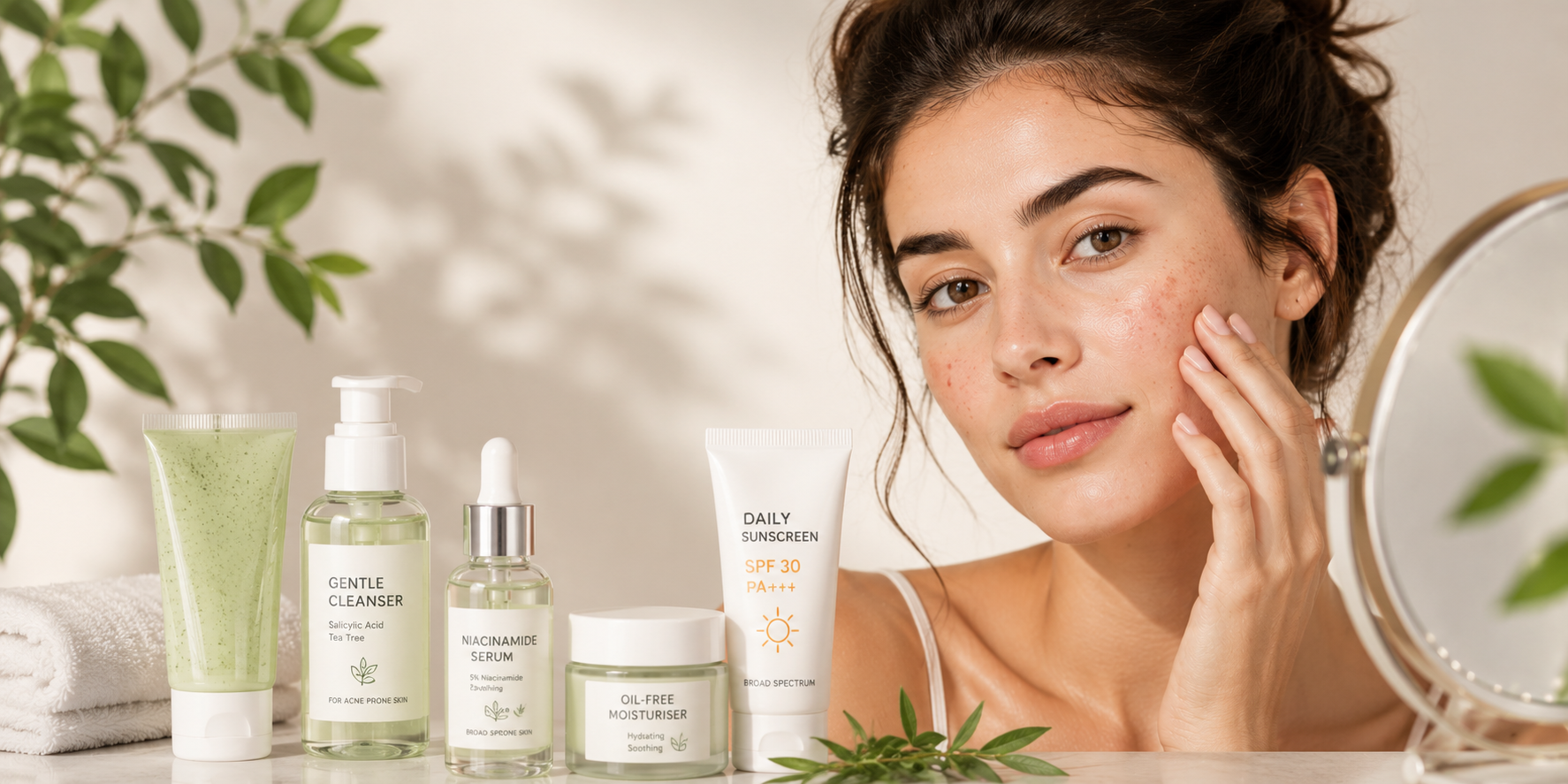
A Simple Acne-Fighting Routine
Morning
-
Gentle Cleanser
-
Niacinamide Serum
-
Moisturiser
-
SPF 30+
Evening
-
Gentle Cleanser
-
Salicylic Acid Treatment
-
Moisturiser
This simple routine can help support clearer skin without overwhelming your complexion.
When to Seek Professional Advice
If your acne is:
-
Painful
-
Severe
-
Leaving scars
-
Not improving after several months
consider consulting a dermatologist or healthcare professional for personalised treatment options.
Final Thoughts
Acne can be frustrating, but effective treatment often starts with simple, consistent skincare habits. By cleansing gently, incorporating proven ingredients such as Salicylic Acid and Niacinamide, keeping skin hydrated, and wearing daily sunscreen, you can help reduce breakouts and support healthier skin.
At Halalzen, we believe that clear skin begins with informed skincare choices. With patience and consistency, these five steps can help you move closer to a clearer, more confident complexion.